
X-Ray Basics
August 24, 2021
Is There Any Use for AI in Metal Detection?
September 1, 2026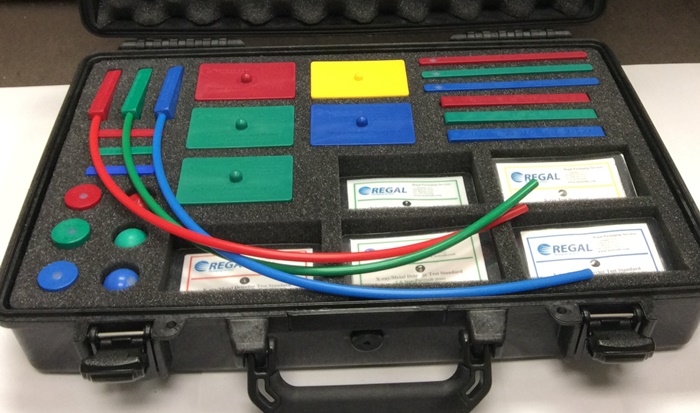
 Making Great Test Pieces
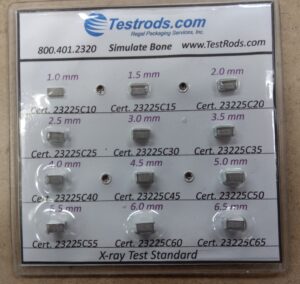
Making a great test piece for the food, pharmaceutical and textile industries is a more complex task than you might imagine. And there has been a steady trend toward using materials that are more safe than what was used in the past, not to mention the certifications that are now required.
At Regal Packaging Services, we understand that the principal objective for food manufacturing and processing companies is to deliver a taste worthy, safe product to the marketplace. Quality and health are also priority concerns, of course. In a well-regulated industry, not meeting established standards can present a significant risk to the proverbial “bottom line.”
There is no company that wants to suffer under the weight of a product recall, either in sales or recall costs, not to mention the loss in reputation and market image. At their worst, these losses can prove unrecoverable. And no company can afford to drive toward continuing effective, efficient cost and production improvement.
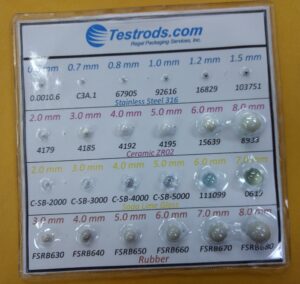
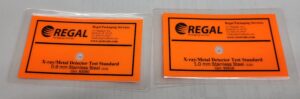
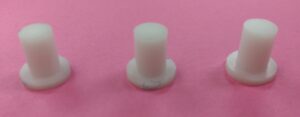
Preventing contamination of product, at least in terms of metal, no matter what the issue, is largely accomplished with the use of metal detectors. So, when it comes to metal detection (or x-ray inspection) verification test pieces, it’s important to know what kind of plastic will work best on a production line.
The Good Old Days
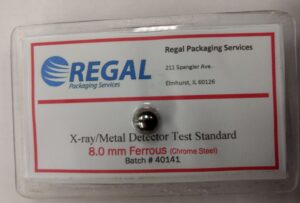
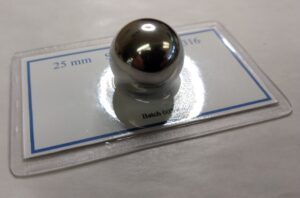
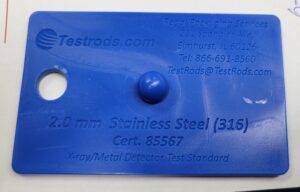
In the “old days,” sales reps used a metal ball attached to a business card with a piece of scotch tape. Those days are, thankfully, long gone.
Acrylic
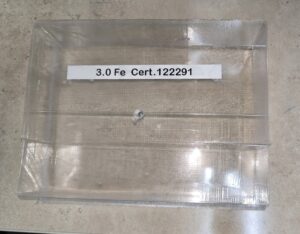
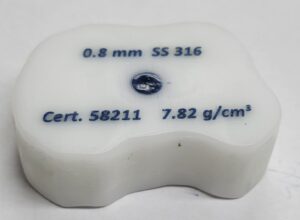
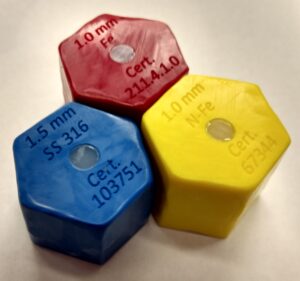
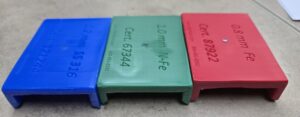
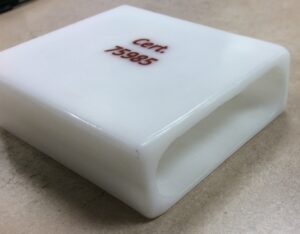
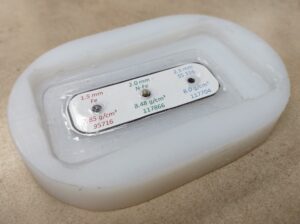
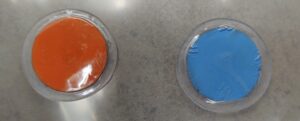
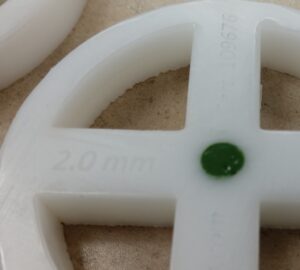
The business card was never an acceptable test piece, and so. many companies evolved to acrylic. Given its see-through properties, it’s a nice way for customers to see where the contaminant seed is and it’s a fairly easy plastic to engrave with size and type metal as well as certification number(s).
But the industry had to move on from acrylic because of its shatter properties. When acrylic breaks, it can shatter into thousands of pieces. You can imagine the mess this could create along with the downtime and cleanup expenses. You might also lose a good share of product, not knowing how far the contamination has spread.
High Strength Plastic
While there are still test pieces suppliers that sell acrylic test pieces, many have moved on to safer plastics, such as:
- Acetron® MD – POM
- Nylatron® MD – PA 6
- TIVAR® MD – PE-UHMW
- Ketron® MD PEEK – PEEK
With these plastics, there is:
- Food contact compliance and with FDA and EU food regulation approvals
- Reduced contamination of food, resulting in less related costs and reduced financial and image risk
- Longer productive periods and lower maintenance costs
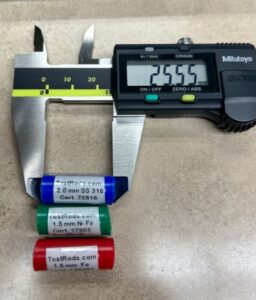
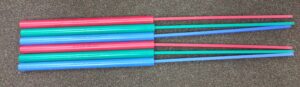
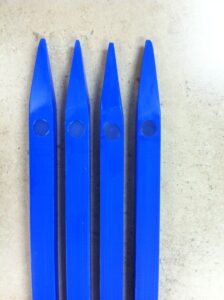
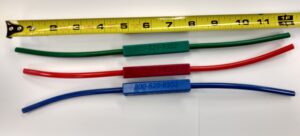
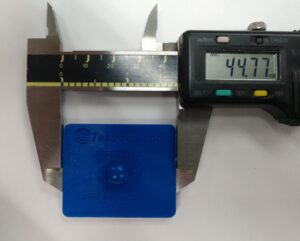
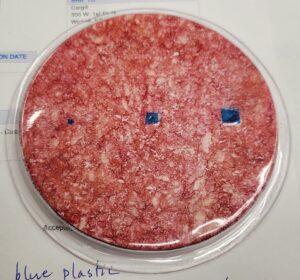
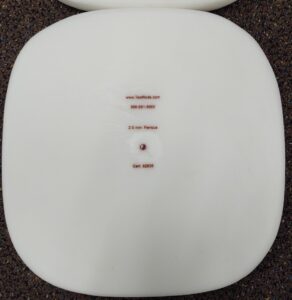
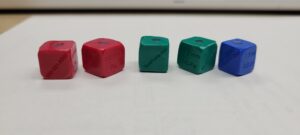
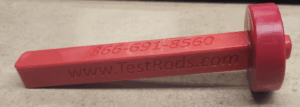
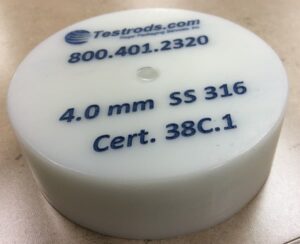
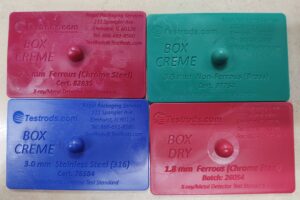
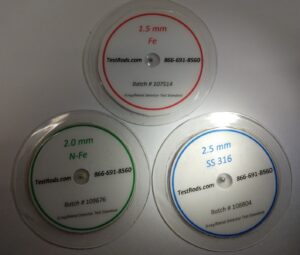
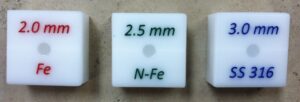
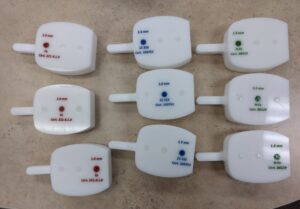
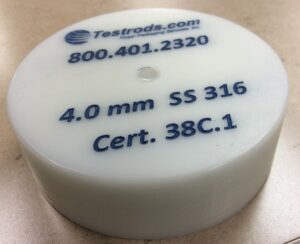
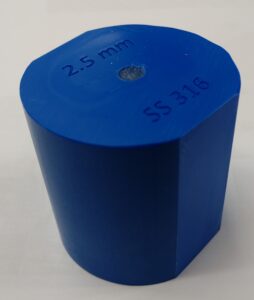
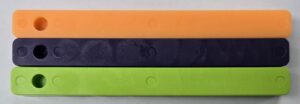
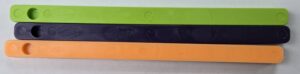
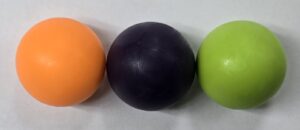
At Testrods.com, we’re using acetal copoloymer (a form of the acetron) which is nearly indestructible. It’s specifications are not only adequate for the We “field tested” it by dropping it from a height of 20 ft and literally throwing it 40 ft across our warehouse. We’ve even gone so far as driving over it with a forklift. We found UHMW is good in some applications, but it’s not engravable, so it’s not easy to mark with regard to the size and type metal, etc. Best of all, this plastic meets all the necessary certification requirements for the aforementioned industries, whether it’s from the FDA, the NIST or if you just need an MSDS sheet.
Naturally, we’re not suggesting or recommending that you throw anything across your food plant, but since we started using acetal copolymer over 13 years ago, we’ve seen less than .06% of our test pieces returned/replaced because they were physically broken. And in most cases, all the pieces could be put back together, that is, nothing was lost on the production line. It’s not possible to withstand the force of every reject system, and we’re not saying that you can send our test pieces through a meat grinder, but you can rest comfortably using our test pieces in your plant. Order here on our website, or Call us at 866-691-8560 or email testrods@testrods.com
Taken, in part, from: